International Early Years
Early Years Foundation Stage
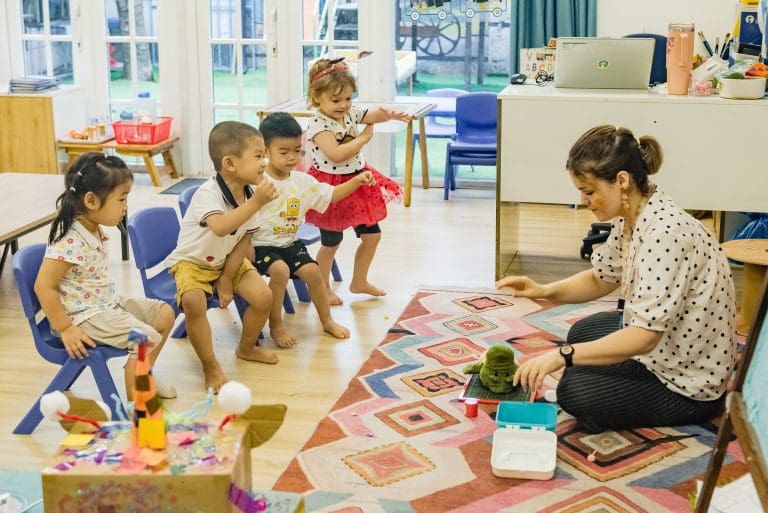
The early years of a child’s education are crucial, and at HAIS, we emphasise the importance of this formative period by focusing on physical, emotional, social and intellectual development.
Our Early Years teaching staff possess a deep understanding of young children. They are highly qualified and dedicated to continuous professional development, regularly reflecting on their methods of implementing the Early Years Foundation Stage (EYFS) framework.
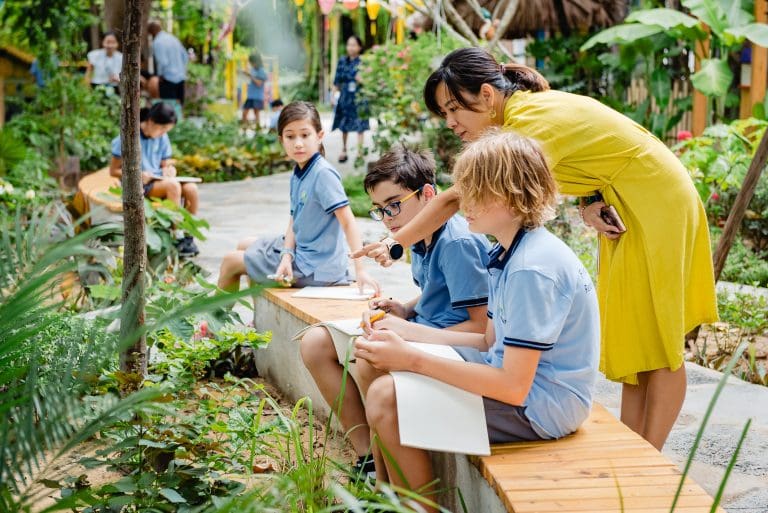
At HAIS, we introduce the fundamentals of Literacy and Numeracy early on, using music, movement, and creative expression to teach concepts such as shapes, patterns, vocabulary, and sight words. Our open campus facilitates play-based learning, which is integrated into the curriculum.
Every child deserves the best possible start in life, and at HAIS, we empower our youngest learners to reach their full potential.

International Early Years
Communication and Language
The development of children’s spoken language is fundamental to all seven areas of learning and development. Early back-and-forth interactions help lay the groundwork for both language and cognitive growth. The quantity and quality of conversations children have with adults and peers in a language-rich environment are essential. Practitioners can effectively enhance children’s language skills by commenting on their interests and activities, and by echoing their words while introducing new vocabulary.
Reading to children frequently and engaging them in stories, non-fiction texts, rhymes, and poems is important. Providing ample opportunities for children to use and practice new words in various contexts will help them thrive. Through conversation, storytelling, and role play, where children express their ideas with support and guidance from their teachers, and with gentle questioning that encourages elaboration, children will become more comfortable using a diverse range of vocabulary and language structures.
Personal, Social and Emotional Development
Children’s personal, social, and emotional development (PSED) is essential for leading healthy and happy lives and is fundamental to their cognitive growth. A key aspect of their personal development is the important attachments they form, which shape their social environment. Strong, warm, and supportive relationships with adults help children learn to understand their own feelings as well as the feelings of others.
Children should be encouraged to manage their emotions, develop a positive sense of self, set simple goals, and have confidence in their abilities. They need to learn to persist and wait for what they want while directing their attention as needed. With adult modelling and guidance, they will also learn how to care for their bodies, including practising healthy eating and managing personal needs independently.
Through supported interactions with other children, they will learn how to make good friendships, cooperate, and resolve conflicts peacefully. These attributes will provide a solid foundation for children to succeed in school and throughout their lives.
Physical Development
Physical activity is essential for children’s overall development, helping them lead happy, healthy, and active lives. Throughout early childhood, both gross and fine motor skills develop incrementally, starting with sensory exploration and building strength, coordination, and spatial awareness through activities with both objects and caregivers.
By creating games and providing opportunities for indoor and outdoor play, adults can support children in developing core strength, stability, balance, spatial awareness, coordination, and agility. Gross motor skills lay the foundation for physical health, as well as social and emotional well-being.
Fine motor skills, which involve precision and control, contribute to hand-eye coordination and are closely linked to early literacy. Providing repeated and varied opportunities for children to engage in small-world activities, puzzles, arts and crafts, and using small tools while offering feedback and support helps them develop proficiency, control, and confidence in their skills.
Literacy
It is essential for children to develop a lifelong love of reading. Reading encompasses two key dimensions: language comprehension and word reading. Language comprehension, which is necessary for both reading and writing, begins at birth. This skill develops when adults engage with children by talking to them about the world around them and sharing books, both stories and non-fiction. Enjoying rhymes, poems, and songs together also plays a significant role in this development.
Skilled word reading is taught later and involves two main components: the ability to quickly decode unfamiliar printed words and the rapid recognition of familiar printed words. Writing, on the other hand, consists of two processes: transcription, which includes spelling and handwriting, and composition, which involves articulating ideas and structuring them in speech before writing.
Mathematics
Developing a strong foundation in numbers is essential for ensuring that all children acquire the necessary building blocks to excel in mathematics. Children should be able to count confidently and develop a deep understanding of numbers up to 10, including the relationships between them and the patterns that exist within those numbers.
By providing frequent and varied opportunities to build and apply this understanding, such as using manipulatives like small pebbles and ten frames to organise counting, children can establish a secure knowledge base and vocabulary from which they can master mathematics.
It is important that the curriculum offers rich opportunities for children to enhance their spatial reasoning skills across all areas of mathematics, including shape, space, and measurement. It is also crucial that children develop positive attitudes and interests in mathematics. They should be encouraged to look for patterns and relationships, make connections, take risks, engage in discussions with adults and peers about their observations, and not be afraid to make mistakes.
Understanding the World
Understanding the world requires guiding children to make sense of their physical environment and their communities. The frequency and variety of children’s personal experiences help enhance their knowledge and awareness of the world around them. Activities such as visiting parks, libraries, and museums, as well as meeting important community figures like police officers, nurses, and firefighters, play a crucial role in this learning process. Additionally, exposure to a wide range of stories, non-fiction texts, rhymes, and poems will deepen their understanding of our culturally, socially, technologically, and ecologically diverse world. Not only does this enrich their knowledge, but it also increases their familiarity with words that are vital for comprehension across different areas of learning. Expanding children’s vocabulary will ultimately support their later reading comprehension skills.
Expressive Arts and Design
The development of children’s artistic and cultural awareness enhances their imagination and creativity. It is essential for children to have regular opportunities to engage with the arts, allowing them to explore and experiment with a variety of media and materials. The quality and diversity of what children see, hear, and participate in are crucial for developing their understanding, self-expression, vocabulary, and ability to communicate through the arts. The frequency, repetition, and depth of their experiences are fundamental to their progress in interpreting and appreciating what they observe and respond to.
Study pathway