Lower Secondary
Lower Secondary
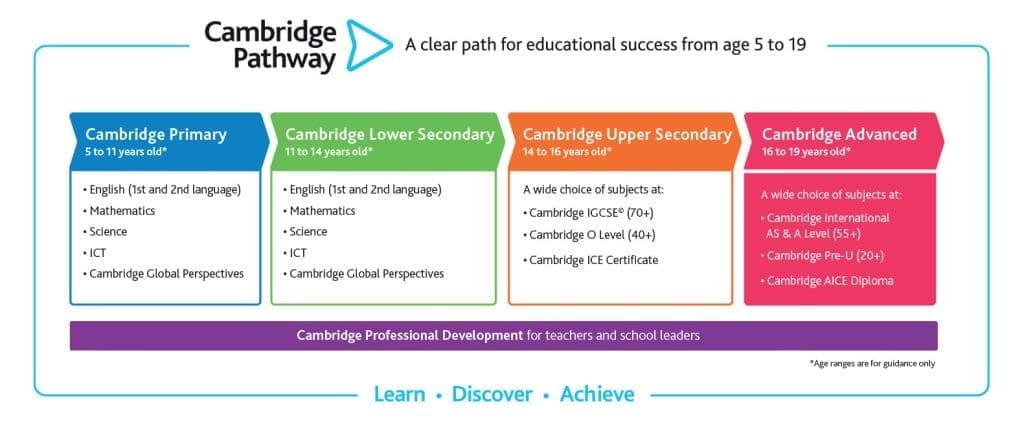
At HAIS, we provide a strong foundation for learning through Cambridge programmes and qualifications, which sets the stage for future academic success. Our dedicated teachers deliver high-quality secondary education, using a curriculum that is both challenging and supportive. We follow the Cambridge pathway, which offers clear, structured progression through each stage of a student’s learning journey. The Cambridge curriculum frameworks, designed by leading education experts and grounded in academic research, guide our teaching and ensure that students are equipped with the skills and knowledge they need to thrive.
 Academic Excellence | Cambridge Lower Secondary Checkpoint Result 2026 – A strong step towards IGCSE
 Academic Excellence | Cambridge Lower Secondary Checkpoint Result 2026 – A strong step towards IGCSE
 Mathematics: 40/50 – 9 points above the international average
 English: 40/50 – 6 points above the international average
 Science: 39/50 – 8 points above the international average
Core Subjects
English Language | English Second Language
At HAIS, students build strong English language skills that can be applied in a wide range of contexts and for different audiences. Whether they are learning English as a first or second language, students are taught to communicate clearly and confidently, both in spoken and written forms. Alongside this, they develop the critical thinking skills needed to engage with texts, media, and information thoughtfully, independently, and with enjoyment.
What will students learn?
The English and ESL curriculum is structured into three areas and focuses on developing deep knowledge, essential skills, and a confident understanding across three key areas:
- Reading – Developing comprehension, analysis, and a love of literature and texts.
- Writing – Learning to express ideas clearly, creatively, and for different purposes.
- Speaking and Listening – Building confident, effective communication through discussion, presentation, and collaboration.
Mathematics
Our Mathematics programme is designed to nurture confident, curious, and capable problem-solvers. Students develop strong reasoning and analytical thinking skills as they explore the principles, patterns, and systems that underpin the subject. Through active engagement, they learn to apply mathematical concepts, strengthening both understanding and fluency.
Our approach encourages students to think mathematically, discussing strategies, exploring different methods, and justifying their solutions with clear reasoning.
What will students learn?
The curriculum is organised into key areas that build a broad and deep understanding of mathematics:
- Number Sense – Developing confidence with numbers, operations, and place value.
- Algebra, Geometry, and Measurement – Exploring patterns, shapes, formulas, and spatial reasoning.
- Statistics and Probability – Interpreting data, identifying trends, and understanding chance.
Sciences
Our Science programme inspires students to explore the natural world with curiosity and confidence. Through hands-on investigations and guided inquiry, learners are encouraged to ask meaningful questions, think critically, and discover how science helps us understand everyday phenomena.
Our approach combines practical skills with scientific knowledge to build a well-rounded foundation in Biology, Chemistry, and Physics. Students learn not only what science is, but why it matters.
The curriculum also helps students connect science to real-world issues, encouraging a sense of personal relevance and responsibility. By seeing the impact of science in daily life, students begin to understand that science is not just something they study – it’s something they do.
What will students learn?
The curriculum is organised into key areas that support students in exploring and understanding the natural world, while building the foundation for future scientific learning:
- Biology, Chemistry, Physics, and Earth and Space – Building subject knowledge through key concepts and practical understanding across the main scientific disciplines.
- Science in Context – Connecting scientific ideas to real-world issues, current events, and global challenges, helping students see the relevance of science in everyday life.
- Thinking and Working Scientifically – Developing core skills in scientific inquiry, including planning investigations, collecting and analysing data, and drawing evidence-based conclusions.
Non-Core Subjects
PSHE
In today’s rapidly changing world, young people need more than academic knowledge; they need the confidence, resilience, and life skills to navigate challenges and make informed choices. The Health Promotion course is designed to support students’ physical, mental, and emotional development, empowering them to lead safe, healthy, and fulfilling lives.
Through a range of age-appropriate topics, students explore:
- Mental and emotional well-being – Building self-awareness, coping strategies, and emotional literacy
- Physical health – Understanding the importance of nutrition, exercise, and personal hygiene
- Relationships and personal safety – Learning to form respectful, healthy relationships and stay safe in various situations
- Citizenship and responsibility – Encouraging active participation in the community and responsible global citizenship
Digital Literacy
Digital literacy is an essential skill in today’s connected world. From communication and collaboration to creativity and critical thinking, technology touches every part of modern life and students need the tools to navigate it with confidence and responsibility.
Our Digital Literacy course empowers students to use technology effectively, ethically, and safely from the early stages of their secondary education. It plays a vital role in preparing learners not just for academic success, but for the challenges and opportunities of the digital age.
What will students learn in this course?
Through engaging, practical activities, students will:
- Understand their place in a connected world – Reflect on their digital presence and make informed decisions about the information they access and share.
- Think critically about technology – Build the knowledge and mindset to assess new digital tools and situations with confidence.
- Create with clarity and purpose – Learn to produce polished documents, presentations, and digital content using a range of tools.
- Act responsibly online – Explore what it means to be a positive, respectful digital citizen.
- Stay safe and well – Learn how to protect their physical and emotional well-being while using technology.
History
At HAIS, our History programme is designed to spark students’ curiosity about the past and help them develop a deep understanding of world history. We focus on key ancient civilizations such as Ancient Egypt and the Khmer Empire, exploring the rich cultural, social, and political developments that shaped these societies.
Through studying history, students will develop critical thinking skills, learn to ask meaningful questions, and engage in analytical discussions. They will examine historical events, analyse different perspectives, and build their own judgment about the forces that have shaped the world.
History also provides students with insights into the diversity of human life, the challenges societies have faced, and how people have adapted to change. By learning about different societies and their histories, students gain a greater appreciation of the complexities of the world, as well as an understanding of their own place in it.
Drama
Drama is both a creative subject and also improves communication, promotes literacy, improves story recall, and generally assists with public speaking (a skill required in all manner of jobs later in life).
Students will learn:
- Communication skills (voice and tone, facial expressions, body language, speech enunciation and pronunciation);
- Public speaking skills;
- Creative thinking and problem solving through scenery building, prop creation, costume design, and improvisation;
- Confidence such as delivering lines on stage, handling unexpected situations promptly and effectively;
- Commitment. Putting together a show can take weeks, and it’s important for everyone involved to follow the production through from beginning to end. Even short practices in drama class require the performers to stay on task throughout the scene; and
- Cooperation and collaboration. Drama class is very much a group effort. You’re not putting on the production alone. Rather, you must work closely with everyone in the performance including the other actors, directors, musicians, and backstage crew.
Art and Design
This subject provides students with a foundation for self-expression, igniting their imagination, creativity, and developing transferable and practical skills. Students explore and broaden their worldview to become critical thinkers, self-reflective and decisive learners. They also learn to articulate their personal responses based on their experiences and knowledge.
What will students learn?
- Developing creative skills will help with many aspects of learning and future development;
- Learning to see oneself as an artist, enhancing self-reflection and independence;
- Developing the skills necessary to express creative ideas and communicate visually;
- Recognizing one’s position and empathizing with others in a world of creativity, innovation, and connection;
Physical Education
Physical Education is an essential component of a balanced curriculum. Regular physical activity has been shown to improve both physical and mental health, and there is a growing body of evidence that physical activity can also improve academic performance across all grade levels.
Students develop skills through a variety of age-appropriate physical activities, including games, team sports, swimming, and athletics.
What will students learn?
- Increase self-confidence, movement, control, and mastery of a variety of skills.
- Improve understanding of concepts, rules, tactics, strategies, and interactions.
- Participate in a respectful and responsible manner, appropriately and safely.
- Develop knowledge and understanding of how physical education can build healthy and active lifestyles.
- Develop transferable skills that promote physical, cognitive, and social development and become motivated learners and independent, critical, and reflective thinkers.
Music
Music nurtures creativity and builds confidence. This subject helps students express themselves and shows the importance of communication as they learn to connect with other artists and with audiences.
Students explore music as artists, composers, and music lovers. They perform, understand, and appreciate music from different cultures, times, and places, helping them develop leadership and collaboration skills, as well as boosting their self-confidence.
What will students learn?
- Nurture a love of music through meaningful and engaging experiences.
- Develop the knowledge, skills, and attitudes necessary to help them grow as true artists.
- Collaborate with others in a purposeful, expressive way through singing and playing music.
- Nurture individual and collective creativity.
- Use their acquired knowledge to explore and create music in a unique, relevant, and valuable way.
World Languages
English as an Additional Language (EAL)
Our HAIS World Languages programme runs from Year 2 in Lower Primary through Year 9 in Lower Secondary. World Languages EAL is not an elective option. Students requiring additional English language support must attend the EAL classes. This is to ensure each child can access the academic content in their learning, which becomes progressively more challenging as they move to the next level of learning. The need for EAL support is generally identified during the admissions assessment process and our annual CEM diagnostic testing. We also consider a student’s progress in English during our normal English class provision and end-of-term assessments.
HAIS EAL classes follow the Cambridge Curriculum Framework for Primary or Lower Secondary English as a Second Language. Many EAL classes are co-taught and use a combination of Cambridge’s official English as a Second Language coursebooks, called Cambridge Global English, along with lessons targeted to specific areas of difficulty to enhance the effectiveness of the lessons.
French as an Additional Language (FAL)
Our HAIS World Languages programme runs from Year 2 in Lower Primary through Year 9 in Lower Secondary. French as an Additional Language is a language option intended for non French speakers who wish to learn French. With approximately 300,000 million speakers, French is the 5th most spoken language worldwide and widely popular in Vietnam. Multiculturality is an important consideration when teaching French as an Additional Language and we aim to instil an interest in a foreign culture and establish a good foundation of grammar and vocabulary through a variety of activities using the four skills of reading, writing, speaking and listening. Teachers use a range of resources suitable to the year and proficiency level.
Vietnamese as a Native Language (VNL) and Vietnamese as an Additional Language (VAL)
Vietnamese is one of the languages taught in the World Languages programme at HAIS. We offer Vietnamese as a first language and Vietnamese as an additional language.
Vietnamese as a native language is for students who have a foundation in Vietnamese and are proficient in listening, speaking, reading and writing. Vietnamese as a Native Language is mandatory for students holding solely Vietnamese nationality in order to maintain their mother tongue to meet the regulations of Circular 04 of the Ministry of Education and Training (MOET). HAIS VNL classes will be taught according to the curriculum of Vietnamese language, Literature, History & Geography in accordance with the curriculum standards of MOET and appropriate to the age and ability of the students.
Vietnamese as an Additional Language is an option for students who do not speak Vietnamese natively and wish to learn Vietnamese. VAL classes are designed to suit beginner learners, teaching all four skills of listening, speaking, reading, and writing, with special emphasis on two communication skills of listening and speaking. The Vietnamese textbooks level 1,2,3 were compiled with enthusiasm by the teachers of HAIS’s Vietnamese studies department with the aim of creating a solid foundation for beginners and arousing the interest of learners.
Commerce
The Commerce programme at HAIS equips students with the essential knowledge, skills, and values needed to navigate the world of consumerism, finance, economics, and business. It provides a solid foundation for understanding business processes and enhances students’ abilities as informed consumers, financial managers, and future professionals.
Through the study of Business Administration, students gain insights into the dynamics of consumer behaviour and financial literacy. They develop the confidence and skills to manage personal finances, evaluate economic decisions, and engage in the global financial system with a clear understanding of how it operates.
The course also includes a practical component that encourages students to think like entrepreneurs. Students are guided to explore their creativity, develop business ideas, and even create their own businesses, giving them valuable hands-on experience in entrepreneurship and business management.
This combination of theoretical knowledge and practical application prepares students to make informed decisions, take initiative, and pursue a wide range of careers in business, finance, and beyond.
Global Perspectives
Global Perspectives at HAIS is an interdisciplinary subject designed to cultivate critical skills that are essential for navigating the complexities of the modern world. The curriculum focuses on developing students’ abilities in research, analysis, evaluation, communication, collaboration, and reflection.
At the secondary level, students engage in a variety of dynamic activities and projects that examine current global issues from multiple viewpoints. They explore personal, local, national, and global contexts, helping them build a deeper understanding of the interconnected world around them. This approach encourages students to think critically about global challenges, understand diverse perspectives, and formulate well-rounded solutions.
The topics covered are aligned with the Cambridge IGCSE curriculum, providing students with the opportunity to develop and apply key skills typically acquired at higher levels. By tackling real-world issues from an early age, students are better prepared to take on global challenges and contribute meaningfully to the world.
Foundation Subjects
Study pathway